Why might the house next door pay a different stormwater charge than yours when both homes sold for about the same price? The City of Savannah's new fee ignores price entirely. It is based on how much of your lot is covered by surfaces rain cannot soak into, and the City measures that square footage itself.
The charge started showing up on City utility bills in September. According to WTOC, every home within city limits is subject to it, and Mayor Van Johnson said most homes fall into "Tier Two," which adds $4.75 a month. Savannah City Council approved the Stormwater Utility on January 22, 2026. Under the ordinance, charges began accruing July 1, 2026.
Why the Bill Shows $9.50
If your bill shows $9.50 for stormwater and not $4.75, the math is still right. The City bills water customers every two months, so each bill carries two months of the fee. The adopted ordinance lists the fee both ways.
The $9.50 also tells you how the whole system is built. The ordinance defines one Equivalent Residential Unit, or ERU, as 2,500 square feet of impervious area, billed at $9.50 bi-monthly. A Tier Two home pays exactly one ERU. In practice, the City's billing treats a home with about 2,500 square feet of roof, driveway, walkways and patio as the typical Savannah house, and every other tier is set relative to it.
What the City Actually Measures
The City's stormwater FAQ says impervious area is measured with GIS mapping, aerial imagery and parcel data. The four tiers apply to detached single-family residential parcels, which the ordinance defines as one residence with no more than two attached dwelling units.
| Tier | Impervious area on the parcel | Monthly fee | What appears on each bi-monthly bill |
|---|---|---|---|
| Tier 1 | 400 to 1,500 sq. ft. | $2.09 | $4.18 |
| Tier 2 | 1,501 to 4,000 sq. ft. | $4.75 | $9.50 |
| Tier 3 | 4,001 to 5,500 sq. ft. | $8.35 | $16.70 |
| Tier 4 | 5,501 to 10,000 sq. ft. | $12.35 | $24.70 |
A Tier 4 home pays almost six times what a Tier 1 home pays. The jumps between tiers are steep. A parcel measured at 4,000 square feet pays $4.75 a month, and one measured at 4,001 pays $8.35. A single-family home with more than 10,000 square feet of impervious area leaves the tier system and is billed per 2,500-square-foot ERU at $9.50 bi-monthly.
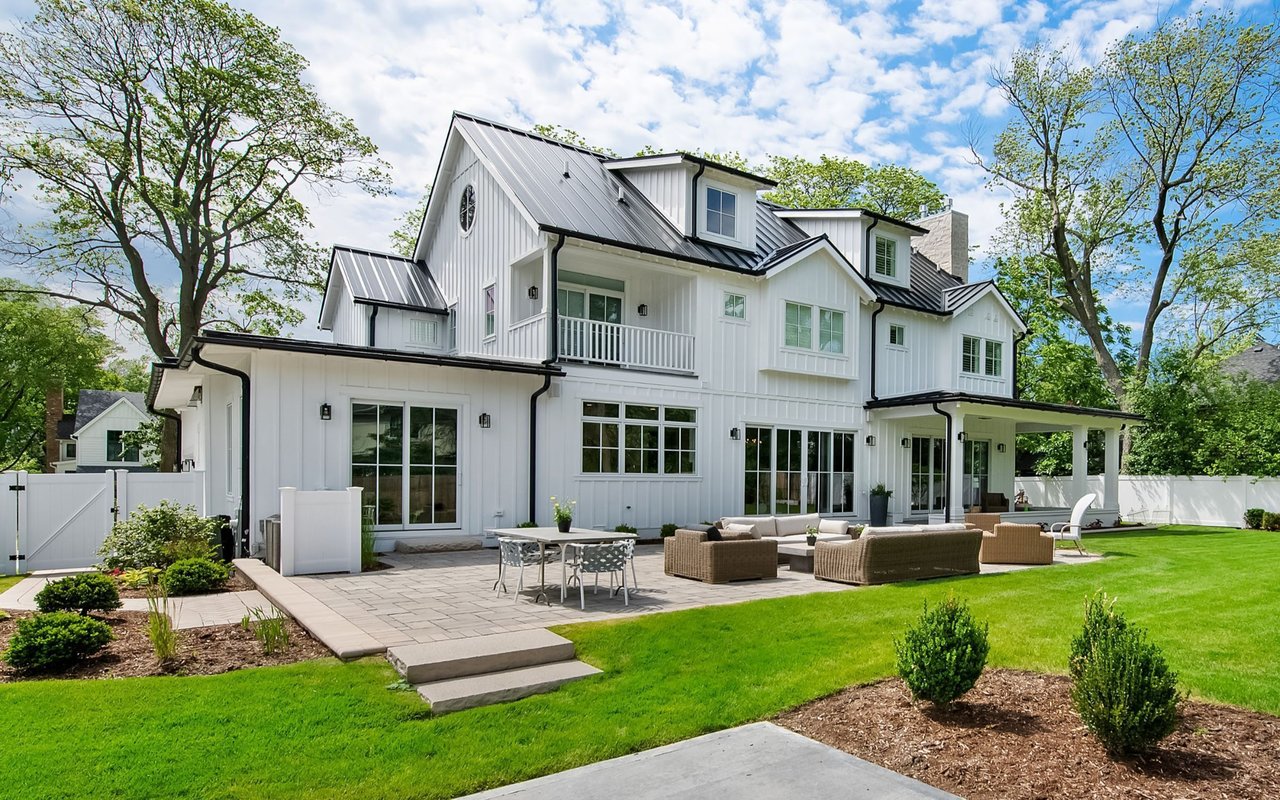
The bill follows the property's footprint. A compact cottage with a short walk to the curb and a sprawling ranch with a three-car driveway can sit in the same price range and land in different tiers. The size of a home's living space also doesn't decide the tier on its own, since a two-story house covers less ground than a one-story house with the same floor area.
Other property types are billed differently. Parcels with more than two dwelling units, including multi-unit condominium developments, fall outside the single-family tiers. Those parcels are charged on their total measured impervious area, converted to ERUs. Rentals have their own rule too. The City may bill a tenant who has opened the utility account, but the property owner remains ultimately liable. The fee applies to developed properties inside the City's service area.
When the Measurement Looks Wrong
Aerial imagery is a fast way to measure thousands of parcels, but it can miss changes on the ground. A carport that was taken down or a slab that was removed may still show up in the measurement. The stormwater ordinance lays out how homeowners can challenge their measured area, with conditions attached.
- Submit a written adjustment request to the Stormwater Utility Manager. You can do this at any time, but the account must be paid and current.
- Expect that the City may ask for a survey or other supporting information about your impervious area, and the ordinance puts that cost on the customer.
- The ordinance allows an appeal of the Utility Manager's written decision to the City Manager within 30 calendar days.
Because of the possible survey cost, the appeal process is most worth it for parcels close to a tier line, where a small correction moves the home down a full tier.
Lowering the Charge Means Changing the Lot
The fee is based on what sits on the ground, so the City's credits reward changes to the ground. The Stormwater Utility User Fee Credit Manual, dated January 22, 2026, lists approved residential green infrastructure practices. These include rain barrels, cisterns, rain gardens, bio-retention cells, pervious pavement and xeriscaping that replaces at least 20% of existing lawn. A qualifying practice earns a 20% credit for three years. The homeowner documents it with a sketch or photo, and City staff may inspect the property before issuing the credit.
The math is modest. On a Tier 2 home, 20% is about 95 cents a month, or roughly $34 over the three-year credit period. On a Tier 4 home, the same credit is worth about $2.47 a month. The larger credits in the manual go to bigger changes.
- Tree planting: 10% to 20%
- Low-impact parcel: 25%, for parcels over two acres with impervious cover below 10%
- No direct discharge: up to 50%, when runoff does not reach the City system
Each of those credits lasts three years. Most account credits are capped at 50%.
The rain barrel is still the easiest place to start. The City's late-summer giveaway ran August 31 through September 2 at the Windsor Forest Center, Tatemville Community Center and Hudson Hill Community Center, as WTOC reported. Mayor Johnson told WTOC on September 1 that more than 800 barrels had been given away. The pickup events are over, but City water customers can still apply for a free barrel through the rain barrel voucher application. The application asks for the utility account's barcode number, entered without leading zeroes in EyeOnWater, plus recent water-use information.
Help That Depends on Income
The credits reward changes to the property. A separate program, which opened this month, is based on household income. The City announced on October 8 that Economic Opportunity for Savannah-Chatham County Area, Inc., known as EOA, will run a Stormwater Utility hardship assistance program.
To qualify, applicants must:
- hold an active City of Savannah residential water account
- live at the service address as their primary residence
- have total household income at or below 200% of the 2026 federal poverty guidelines
- be enrolled in an active payment plan if the account is past due
That income limit works out to $31,920 for one person, $43,280 for two, $54,640 for three and $66,000 for a household of four. Appointments are booked only by phone at 912-888-8082, not through the EOA office or website. Applicants then meet in person at the EOA Cuyler Building, 618 West Anderson St. They need to bring a current water and sewer bill, an unexpired photo ID and proof of income for the previous 30 days for each adult in the household.
Where the Money Shows Up
The fee pays for flood reduction, drainage maintenance, ditch and canal cleaning, and drainage improvements. Mayor Johnson explained the reason for a dedicated fee to WTOC:
"We could not do anything sustainable or substantial with our storm water without the funding source to make it consistent."
The work most drivers can see right now is on Abercorn Street. WTOC reported that northbound Abercorn between 57th and 58th Streets closed on August 31 for storm drain work, with the closure expected to last through 4 p.m. on Friday, January 29. WTOC described the fee as helping to fund this construction. The work sits inside the City's Casey South Drainage Improvements Phase II project. That project covers the area from 55th to 63rd Streets between Abercorn Street and Harmon Avenue and is meant to increase drainage capacity in the Casey South basin. The City's project page estimated completion in November 2026. It also described earlier work at East 57th, East 58th and Battey, followed by storm pipe replacement and water line improvements on East 57th.
The stormwater line on each bill helps pay for drainage projects like the one on Abercorn, and the square footage of hard surface on your own lot sets your share.
This post is general information about a City fee and its credit and appeal rules. It is not legal, tax or financial advice, so please confirm your own account and tier with the City or a qualified professional.
If you're planning a patio, a wider driveway or a home purchase, your stormwater tier is now part of your monthly costs. When my clients compare homes in Savannah, I help them account for carrying costs like this one. If you'd like to talk through what a specific property might cost to own each month, Lachandra Bodison is glad to help. Schedule a free consultation, and we'll start with the numbers.